
If your household bills have felt suffocating lately, you’re not imagining things. Rising economic pressures, infrastructure costs, and stubborn inflation have pushed utility expenses to record highs in 2026, and the term “Billmageddon” has entered the household vocabulary for good reason.
Factors like the soaring costs of global oil and the capital required to maintain aging infrastructure set the baseline for utility prices before energy ever reaches your home. But here’s the thing: most households bleed the most cash through unmonitored hidden fees, inefficient energy use, and outdated service contracts. You don’t need a month of meticulous spreadsheets to fix that. A single weekend of focused auditing can permanently slash hundreds from your monthly overhead.
Key Takeaways
- Audit subscriptions: Cancel hidden digital auto-renewals to free up monthly cash flow immediately.
- Optimize connectivity: Negotiate broadband and mobile costs using competitor retention deals.
- Reduce usage: Swap outdated lighting and ditch inefficient habits to lower energy consumption.
- Secure contracts: Compare electricity plans and lock in a fixed, transparent rate to avoid market volatility.
- Seal the home: Apply targeted insulation to doors and windows to prevent costly heating and cooling loss.
Trimming Unnecessary Subscriptions
Identifying Hidden Auto-Renewals
The fastest way to improve your monthly cash flow is to cut non-essential recurring charges that quietly drain your bank account. Sound familiar? Many households pay for streaming platforms, app subscriptions, and digital services they barely use, simply because auto-renewals stay completely out of sight.
Pull up your last two months of bank and credit card statements. Highlight every recurring charge. Then decide which services actually deserve your money and cancel the rest. Trimming just a few unused platform fees can redirect a surprising amount toward essentials and savings, without changing your daily routine one bit. Think of this as the first domino in a larger weekend overhaul of your budget.
Negotiating Broadband and Mobile Costs
Internet and phone providers are terrified of losing customers to new fiber-optic or 5G competitors expanding into local markets. Because of that pressure, major telecoms keep unadvertised retention deals ready to go, specifically designed to prevent customer churn.
So no, you don’t have to accept the rate increase that lands when your promo period ends. A brief, strategic phone call with your provider can significantly reduce your bill. Here’s how to approach it:
- Research rival offers: Find competitive introductory rates from local providers and use them as your bargaining chip during the call.
- Request the retentions department: Skip frontline customer service. Ask the retentions team directly; they have the authority to unlock exclusive discounts.
- Check for hardware fees: Ask about legacy hardware rental charges (e.g., outdated modem fees) that may be hidden on your monthly statement, and request their removal.
Immediate Changes to Reduce Electricity Consumption
Banishing “Lazy” Household Habits
Small behavioral tweaks in how you operate your home add up to serious savings over a year. Bumping up your thermostat a degree or two in the summer, or layering up in winter instead of cranking the heat, can slash energy bills. A short daily ventilation routine removes household humidity, which lets rooms feel warmer at lower temperatures during cooler months.
And don’t overlook phantom power loads. Unplugging unused electronics prevents passive electricity drain while you sleep. Operating large appliances like washing machines and dishwashers only when they’re full maximizes both water and energy efficiency. Zero financial investment required; you’re just ditching wasteful habits.
The 87-Cent Lighting Solution
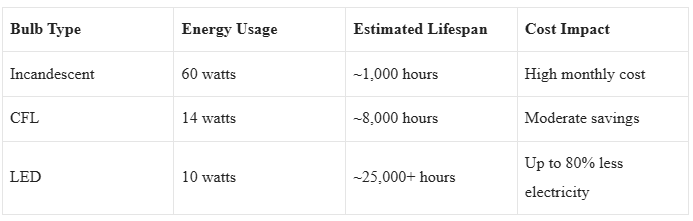
Replacing traditional incandescent bulbs with LEDs is one of the most cost-effective weekend projects a homeowner can tackle. The latest generation of LED lighting provides excellent illumination while drawing a fraction of the wattage required by older bulbs. Upgrading uses 80% less electricity compared to conventional incandescent options.
The long-term savings from reducing energy usage and making fewer replacement purchases make this a no-brainer. Not sure which bulb type to choose? Here’s a quick comparison:
Securing Better Energy Rates and Transparent Contracts
Utility companies nationwide have been raising rates aggressively to cover aging grid infrastructure and surging electricity demand from AI data centers. But if you live in a deregulated market, you’ve got a powerful card to play: the ability to shop around.
Texas’s deregulated electricity market, managed by the Electric Reliability Council of Texas (ERCOT), covers over 27 million Texans and handles roughly 90% of the state’s electric load. That framework forces retail providers to compete for residential contracts, which drives rates down. In April 2026, the average residential rate in Texas was 16.18¢/kWh, about 10% below the national average. If you’re in the ERCOT footprint, you’re sitting on a real geographic advantage.
Choosing the Right Electricity Plan
Taking advantage of a deregulated market means finding a provider that offers straightforward pricing, not confusing promotional gimmicks. Too many consumers get hooked by low introductory rates that spike after the first few months. Utility companies often bury complex usage requirements deep in their terms of service, making actual monthly costs nearly impossible to predict.
For residents within the ERCOT footprint, comparing Texas electricity plans through a transparent provider like Energy Texas is one of the highest-value tasks you can knock out in a weekend. Locking in a reliable plan keeps your household budget stable regardless of severe weather events or seasonal price swings.
The biggest mistake homeowners make is disregarding the Electricity Facts Label (EFL). To truly lower your bills, look for a provider that offers 100% transparent pricing and avoid plans with hidden base charges or bizarre usage tiers. Locking in a fixed-rate contract protects you against seasonal market volatility.
So what does this actually mean for you? Check the expiration date of your current utility contract now. If you’re out of contract or nearing the end of your term, you could be rolling onto an expensive variable rate without realizing it. Spending 15 minutes reviewing fixed-rate options can shield you from unexpected summer price surges, especially since overall demand on the ERCOT grid increased by 5% over the prior year, hitting 372 terawatt-hours. A locked-in rate today serves as your insurance policy against fuel price spikes and infrastructure shortfalls.
Quick-Fix Insulation Strategies for the Weekend
Targeted Efficiency Upgrades
Physical household upgrades offer measurable returns and can be completed within 48 hours. Small drafts around aging windows, exterior doors, and wall outlets contribute heavily to seasonal energy loss. Applying weatherstripping and outlet covers is inexpensive and immediately helps your home hold its internal temperature.
Professional air-sealing and targeted insulation upgrades have helped homeowners cut electric bills by 20-25%. Bigger systemic projects (like installing solar panels or tapping into Texas’s growing battery storage grid) require more capital and long-term planning. But sealing noticeable air leaks with basic hardware store materials? That’s a Saturday afternoon project anyone can handle. And it makes sure the air conditioning you’re paying for actually stays inside your house.
Reclaiming Control Over Your Cash Flow
Lowering your baseline household costs is really about financial intentionality. Audit your subscriptions, tweak your daily energy habits, and lock in a fair utility contract; those three moves alone can permanently reduce your living expenses.
Combine those behavioral shifts with physical home improvements, and you could significantly cut energy costs. You don’t have to do everything at once. Pick just one step from this guide and knock it out before Monday morning. Your wallet will thank you, and the momentum will carry into next weekend, too.