
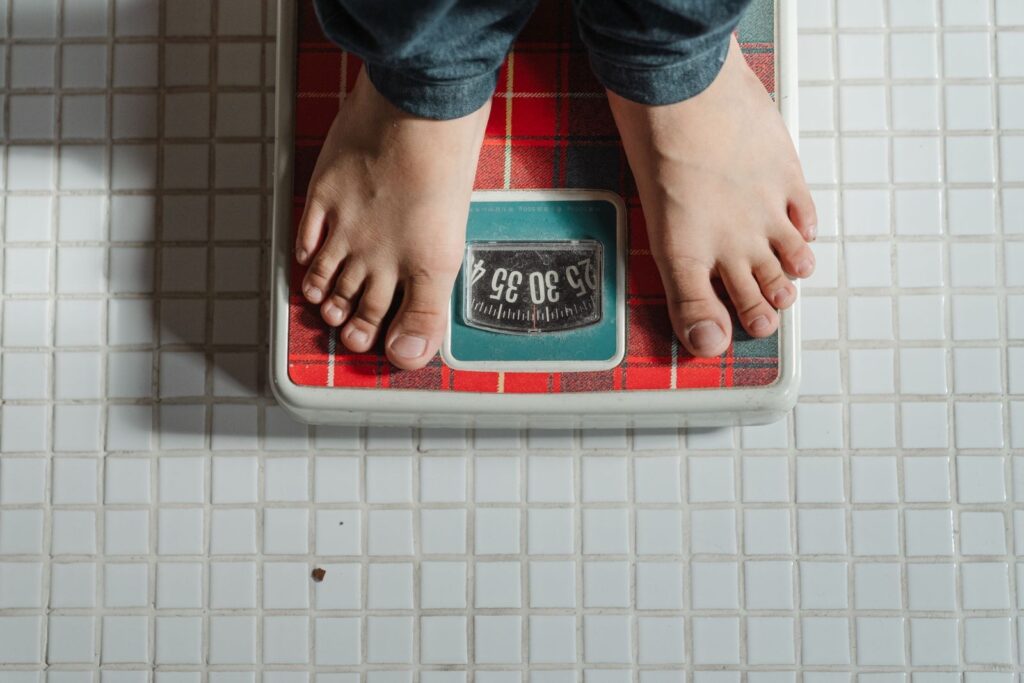
Total weight lumps muscle and fat together, which is why calorie and protein targets built on lean mass tend to make more sense, and why smaller cuts tend to leave more muscle behind.
Two people, one number, very different engines
Two adults step on the same bathroom scale on the same morning. Both read 172 pounds. One carries 128 pounds of lean mass. The other carries 110. To the scale they’re identical, and to most calorie apps they are too, because weight is the only body number those apps ask for.
Their bodies don’t agree. Lean mass, meaning everything that isn’t fat, including muscle, organs, bone and water, is what drives resting burn. Run both people through the Katch-McArdle formula, which multiplies lean mass in kilograms by 21.6 and adds 370, and the first person’s estimated resting burn comes out around 1,624 calories a day. The second lands near 1,448. That’s a gap of roughly 175 calories a day before either of them has walked to the car.
After 40, that gap matters more than it used to. Holding on to muscle becomes a priority, and an eating plan that ignores how much muscle you have is working from the wrong starting point.
Where weight-only math goes wrong
A weight-only calculator has to guess at body composition, and it usually guesses using averages. For someone with more muscle than average, the guess runs low. For someone with less, it may run high. Many of these apps also fall back on a common floor of 1,200 calories a day, a figure that can sit below what a muscular person burns lying on the couch.
Eating below resting burn for long stretches is the kind of target worth avoiding, especially for anyone trying to keep the muscle they have. A better approach starts with an actual measurement. Anyone who has had a DEXA, InBody or Bod Pod scan already holds the number that matters, printed under a label like Lean Body Mass or Fat-Free Mass.
FitNoggin, an education site for adults over 40 who have a body scan report but no plan, built its free lean mass calculator around that idea. You enter your weight and either your lean mass or your body fat percentage from the report, choose an activity level, and pick between two formulas: Katch-McArdle or Cunningham, which adds 22 calories per kilogram of lean mass to a base of 500 and runs somewhat higher, so it’s described as suited to people who train hard. The page says nothing is sent or saved, and it shows each calculation step by step.
Why a smaller cut is the smarter cut
Resting burn is only the base. Daily burn multiplies it by an activity factor, from 1.2 for a mostly seated week up to 1.725 for training six or seven days. For the first person above, at a light activity level, daily burn works out to about 2,233 calories.
The tempting move is to cut hard from there. FitNoggin’s rule goes the other way. The calorie target is set 15 percent below daily burn, capped at a 500 calorie cut, and never allowed under resting burn. For our first person, 15 percent of 2,233 is about 335, which is under the 500 cap, so the target lands at roughly 1,898 calories a day. The second person, at the same activity level, would land near 1,692.
The logic is about what the body gives up. A steep deficit raises the odds that some of the loss comes from muscle rather than fat, and after 40, lost muscle tends to be slow to win back. A modest gap asks less of the body at once. It’s slower, and that’s the point. FitNoggin’s site states plainly that it keeps deficits small on purpose and that no target ever goes below resting burn. It also makes no promise about weight loss, and labels every figure it produces as an estimate.
Protein follows the muscle, not the scale
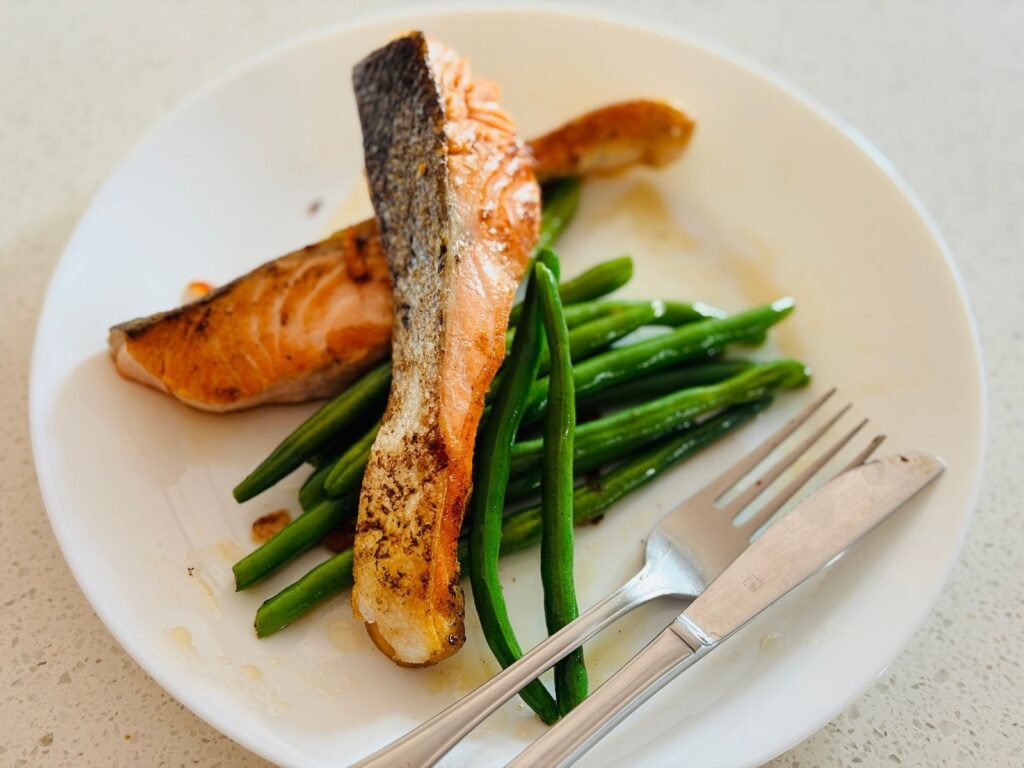
The same thinking applies to protein. A target pegged to total weight hands a person with more body fat a higher number than their muscle needs, and hands a lean, heavy lifter one that may be too low. FitNoggin’s calculator sets protein at one gram per pound of lean mass. For our two 172 pound adults, that’s 128 grams for the first and 110 for the second.
That makes the number easier to plan around. Spread across three or four meals, 128 grams works out to roughly 32 to 43 grams at a sitting. Pairing that intake with regular strength training gives the muscle a reason to stay. Anyone planning a major change to eating or training should talk to a doctor first, particularly with an existing health condition.
When you don’t have a scan yet
Not everyone has a report in hand. FitNoggin’s calculator can estimate lean mass from height and weight using the Boer formula, though that’s a stand-in until a real measurement exists. People who’ve had a breath test, which measures resting rate rather than estimating it, can enter that figure directly instead of relying on a formula.
Every one of these numbers is an estimate until a later scan confirms or corrects it. That’s a useful way to treat them. Write down your lean mass, your resting burn and your two targets, then put the bathroom scale somewhere you won’t trip over it every morning. It’ll still be there. It just shouldn’t be the number setting your plate.


